How to Choose the Best Cooling Fan in 2026?
Choosing the best Cooling Fan in 2026 requires more than checking airflow numbers. Room size, heat sources, noise tolerance, and daily usage all matter. A fan beside a warm gaming computer needs different performance from one cooling a quiet bedroom.
Start with measurable details. Check airflow, motor speed, power consumption, blade design, and safety certifications. Manufacturer claims can look impressive, yet testing conditions may differ. Look for independent reviews, warranty coverage, and clear technical specifications. A reliable product should explain its operating limits, not hide them.
I have found that placement changes results dramatically. A fan aimed across a room can feel stronger than one pointed directly at a wall. Dust also reduces performance, especially around grilles and bearings. That small maintenance issue is easy to overlook. It should not be.
Modern models may include temperature sensors, automatic speed control, app settings, and quieter brushless motors. These features sound useful, but complexity can create new problems. A smart function is worthless if the connection drops repeatedly. Consider controls that remain practical without a phone.
Noise ratings deserve careful attention. A quoted decibel figure may represent the lowest setting, not normal operation. Listen for humming, rattling, or sudden speed changes. These details affect comfort during sleep and focused work. Efficiency matters too, particularly when the fan runs for many hours.
The right choice balances cooling performance, reliability, maintenance, and real-world comfort. No single model suits every space. Measure your needs honestly, compare evidence, and leave room for a little doubt. That is often where better decisions begin.
What Is a Cooling Fan and How Does It Work?
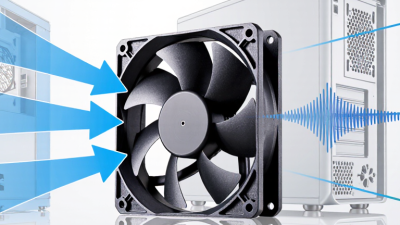
A cooling fan is a mechanical device that moves air across a warm surface.
It does not create cold air. Instead, it carries heat away from components, vents, or enclosed spaces. A motor spins blades, creating a pressure difference that pushes air through the system.
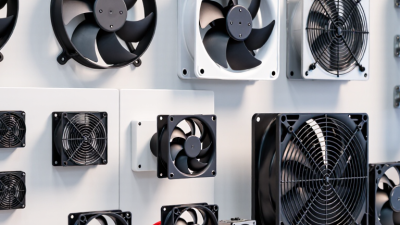
Axial fans move air along the shaft, while centrifugal fans redirect air outward. The better choice depends on airflow, static pressure, noise, and available space.
Temperature sensors or control software can adjust fan speed. Pulse-width modulation allows smaller speed changes and can reduce unnecessary power use.
This matters as computing demand grows. The International Energy Agency’s Electricity 2024 report estimates that data-centre electricity use could reach 620 to 1,050 terawatt-hours by 2026.
Cooling efficiency will become harder to ignore.
Airflow alone is not cooling.
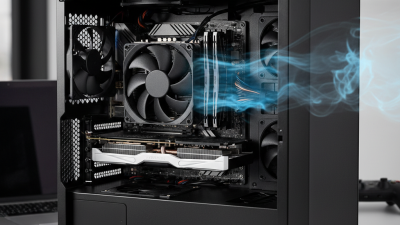
Air must reach the hottest surfaces and leave without recirculating. ASHRAE’s thermal guidance stresses controlled equipment inlet conditions, not simply maximum fan speed.
In practical testing, a powerful fan can perform poorly when its intake grille is blocked by dust. I still see this mistake often.
Measure the temperature before changing the fan. Check the airflow path, filter resistance, and pressure requirement.
A quiet fan with suitable pressure may outperform a faster fan in a restricted enclosure. Small details matter.
Which Cooling Fan Specifications Matter Most in 2026?
In 2026, airflow is only one part of choosing a cooling fan. The U.S. Department of Energy reports that cooling can consume about 40% of data-center electricity. Efficiency therefore deserves serious attention. Check airflow in cubic feet per minute, but also examine watts per CFM. A high-airflow fan may waste energy if it runs continuously.
Static pressure matters when air passes through filters, radiators, or narrow vents. I test this with a simple tissue strip and a temperature probe. A fan rated at 120 CFM in free air can perform much worse inside a restricted case. Pressure curves reveal more than headline airflow. They are often overlooked.
Noise should be measured in dBA, preferably at a stated distance. A three-decibel increase represents roughly twice the acoustic intensity. PWM control allows finer speed adjustment than basic voltage control. Look for a wide operating range, stable startup, and thermal protection. Bearing type affects service life, especially in dusty rooms. The Uptime Institute’s Global Data Center Survey repeatedly links operational efficiency with disciplined thermal management, not merely maximum fan speed.
Do not trust one number.
In my experience, a slightly slower fan with stronger pressure can cool a blocked radiator better. Yet manufacturer test conditions are not always comparable. I would record inlet temperature, outlet temperature, power draw, and noise under the same load. That extra measurement can expose a disappointing specification before installation. Reliability also depends on dust, mounting vibration, and cleaning access. These practical details rarely fit neatly into a product table.
How to Match a Fan Type to Your Cooling Needs
How to Choose the Best Cooling Fan in 2026?
Matching a fan to your cooling need starts with the room, not the product label. The International Energy Agency’s The Future of Cooling report projects global space-cooling demand could triple by 2050. That pressure makes efficient airflow increasingly important. For a bedroom, choose a quiet ceiling or tower fan with several low-speed settings. A ceiling fan cools people by moving air across skin, not by lowering room temperature. Quiet matters. Check the manufacturer’s noise rating before buying.
For a workshop or garage, an industrial floor fan usually fits better. Its wider airflow pattern can move warm air through a large, open area. Look for airflow data measured under AMCA 210 or ISO 5801 procedures. These standards improve comparison between models. For a desk, a compact circulator is practical. It should offer adjustable tilt and a stable base, especially near papers or tools. The U.S. Department of Energy notes that ceiling fans may let occupants raise an air-conditioner thermostat by about 4°F while maintaining comfort.
I once selected a powerful fan for a small office and regretted it. The airflow scattered documents and created an irritating draft. More airflow is not always better. Measure the room, identify the occupied zone, and consider humidity, noise, and cleaning access. Energy use also deserves attention; a fan that runs twelve hours daily can expose inefficient motor design. Some product specifications remain incomplete, so treat impressive claims carefully.
How to Choose the Best Cooling Fan in 2026?
How to Match a Fan Type to Your Cooling Needs
Airflow is measured in cubic feet per minute (CFM). Axial fans are suitable for open, low-resistance airflow, while centrifugal fans are better for ducts, filters, and systems that require higher static pressure. Mixed-flow fans provide a balance between airflow and pressure, and cross-flow fans are useful when broad, even air distribution is needed. Actual performance varies with fan size, speed, system resistance, and operating conditions.
How to Compare Energy Use, Noise, Durability, and Smart Features
How to Choose the Best Cooling Fan in 2026?
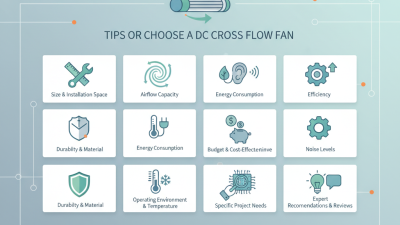
When I compare cooling fans, I start with energy use, not extra features. Check the rated wattage, then estimate daily cost using your local electricity price. A lower-wattage motor may save money, but weak airflow can force longer operation. Look for airflow ratings measured in cubic metres per minute, not just impressive speed settings. Noise matters at night. A fan producing 35 decibels may feel comfortable in a bedroom, while rattling sounds can become irritating quickly. Listen at several speeds if possible.
Tips:
Test the fan near your bed. Check the power label. Feel for vibration. Inspect the grille and base. Small details matter.
Durability depends on more than a heavy appearance. Examine the motor housing, blade balance, cable quality, and oscillation joint. Sealed bearings can reduce maintenance, although they do not guarantee a long service life. I once chose a powerful model with a thin plastic base. It moved air well, but shook across the floor. That choice was not entirely right. A practical warranty and available replacement parts also improve confidence.
Smart features can help, but they should solve a real problem. Timers, temperature sensors, and automatic speed control are useful in changing rooms. App control is less valuable if setup is unreliable. Check whether controls work without internet access, whether software updates continue, and what data the device collects. A simple remote may be more dependable. Fancy is not always better.
How to Install, Maintain, and Evaluate Your Cooling Fan Choice
Choosing a cooling fan in 2026 involves more than comparing airflow numbers. Installation quality often determines real performance. Check the fan’s voltage, current draw, connector type, airflow direction, and static pressure before purchase. A high-airflow model may perform poorly against a restrictive filter or narrow vent.
Turn off power before installation. Mark the airflow arrow on the frame, then leave clear space around the intake and exhaust sides. Use rubber mounts when possible; metal contact can create an irritating hum. Tighten screws evenly, but do not crush the frame. I once installed a fan too close to a cable bundle. It worked, yet the airflow became uneven and the cable insulation showed wear later.
Maintenance should match the environment. Inspect dusty rooms every month, while cleaner spaces may need checks every three months. Remove the grille and hold the blades still while cleaning. Spinning blades with compressed air can damage bearings or generate unwanted electrical energy. Wipe stubborn dust with a dry, soft brush. Check for grinding sounds, wobbling, loose screws, and heat around the connector. Replace damaged cables immediately.
Evaluate the fan under normal use, not only on a specification sheet. Record room temperature, equipment temperature, noise, and power consumption before and after installation. A simple thermal probe helps reveal small changes. Listen at night, when vibration becomes easier to notice. My own early tests ignored humidity, which made the results less reliable. Repeat measurements under similar conditions, and question unusually impressive numbers.