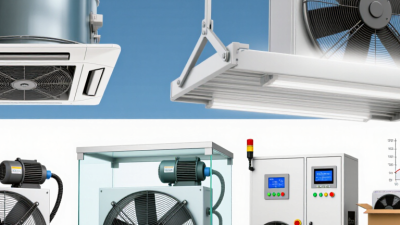
China’s Cross Flow Fan sector supports air conditioners, air curtains, air purifiers, fan coils, and compact heating equipment. Its products often work quietly behind a grille, moving air across a room without visible machinery. That hidden role makes supplier selection more technical than brand recognition.
The International Energy Agency reports in The Future of Cooling that space-cooling electricity demand could more than triple by 2050 without stronger efficiency measures. This pressure affects every internal component, including cross-flow impellers, motors, bearings, and control systems. China’s National Bureau of Statistics continues to record substantial air-conditioner and household-appliance production, confirming the country’s deep manufacturing base. Meanwhile, China HVAC Association industry reports highlight tighter expectations for energy efficiency, reliability, noise control, and intelligent HVAC integration.
This guide examines China’s leading Cross Flow Fan manufacturers through practical criteria. These include production capacity, motor efficiency, airflow stability, noise performance, customization, testing capability, and export experience. It also considers whether a supplier can provide drawings, samples, batch traceability, and after-sales support. Those details matter. A polished catalogue cannot replace a stable test result.
Public rankings remain incomplete. Some capable factories operate as OEM specialists and disclose limited financial information. That is easy to overlook. Therefore, the comparison should not treat company size as the only proof of quality. Buyers should verify laboratory data, material specifications, balancing accuracy, and performance under actual installation conditions. The final shortlist should reflect evidence, not marketing language. Even this approach has limits, because published data may change between production cycles and regional markets.
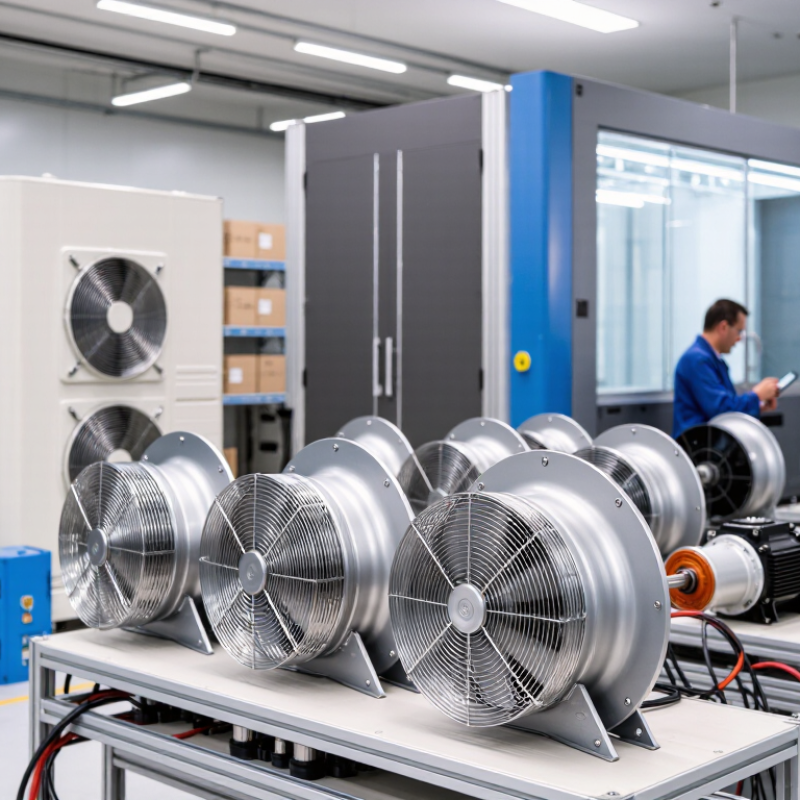
A cross flow fan, also called a tangential fan, moves air across the width of a long cylindrical rotor. Its impeller contains many narrow blades. Unlike a centrifugal fan, it does not discharge air from one central outlet. It creates a broad, even airflow. This design suits air curtains, indoor units, heaters, display cabinets, and other compact equipment.
The working process is simple but not weak. Air enters the rotor near its outer edge. The rotating blades carry it through the impeller and form a small internal vortex. This vortex guides the air toward the opposite side. The air then leaves through a long outlet with relatively uniform pressure. A well-designed housing is essential. Poor clearance can increase noise, reduce airflow, and waste motor power.
In practical product checks, I would measure airflow, static pressure, noise, vibration, and motor temperature. A smooth rotor should run without noticeable shaking. Balance matters. So does blade spacing. When comparing manufacturers in China, buyers should request performance curves, material details, sample testing, and quality records. Factory photos alone prove little. One overlooked issue is dust buildup between blades. It can slowly change performance, even when the motor still works. I would also verify insulation, wiring safety, bearing life, and operating temperature. No selection is perfect; a quieter fan may deliver less pressure, while a stronger model may need better vibration control.
Chinese cross flow fan manufacturers are in high demand because they serve a large, expanding HVAC supply chain. Grand View Research valued the global HVAC systems market at about USD 183 billion in 2023. It also forecasts strong growth through 2030. China’s National Bureau of Statistics recorded nearly 245 million room air conditioners produced in 2023. That scale creates steady demand for compact, quiet, and efficient tangential fans.
Manufacturing depth is another advantage. Many Chinese factories can produce impellers, housings, motors, and control parts under one supply program. This shortens lead times and supports custom airflow designs. Engineers commonly check air volume, static pressure, vibration, sound level, and motor temperature. Small differences matter. A poorly balanced impeller can create noticeable noise after installation.
Cost remains important, but it is not the only reason buyers choose China. The International Energy Agency continues to identify cooling demand as a major driver of electricity use worldwide. Therefore, buyers increasingly request efficient motors, recyclable materials, and traceable quality records. ISO-based quality systems and batch testing can improve reliability, although certification alone proves little. Some suppliers still publish limited performance data. That weakness deserves careful review. Independent testing, sample approval, and long-duration operation tests provide stronger evidence before volume purchasing.
| Evaluation Dimension | Typical Chinese Manufacturing Profile | Representative Technical Data | Why It Matters to Buyers |
|---|---|---|---|
| Product Type | AC, DC, and electronically commutated cross-flow fan assemblies | Common power inputs include 12 VDC, 24 VDC, 48 VDC, 110–120 VAC, and 220–240 VAC | Supports HVAC, air curtains, heating equipment, display cabinets, and electronic cooling applications |
| Typical Fan Diameter | Compact to medium-size cylindrical impeller configurations | Approximately 30–150 mm impeller diameter, depending on the application | Enables integration into narrow air channels and space-constrained equipment |
| Typical Fan Length | Standard and customized lengths are available for equipment-specific airflow paths | Approximately 100–1,200 mm; actual length is determined by airflow and installation space | Makes one-sided, full-width, and modular air-distribution designs possible |
| Airflow Capability | Designed for low-profile, evenly distributed airflow rather than concentrated axial flow | Common product ranges are approximately 50–1,500 m³/h, subject to size, speed, and system resistance | Suitable for uniform air curtains, heat transfer, ventilation, and cabinet cooling |
| Speed and Control | Fixed-speed, multi-speed, PWM, and variable-speed designs are commonly offered | Typical operating speeds range from about 500 to 3,000 rpm, depending on motor type and impeller design | Allows noise, power consumption, and thermal performance to be balanced for each application |
| Motor Efficiency Options | Induction, shaded-pole, permanent-magnet, and EC motor configurations are available across the market | EC and brushless DC designs generally provide improved controllability and lower maintenance than basic AC motor designs | Helps equipment manufacturers meet energy, temperature, and service-life targets |
| Noise Performance | Noise optimization commonly includes impeller balancing, airflow-path design, and speed control | Many compact models are specified in the approximate range of 35–70 dB(A), measured under defined test conditions | Important for indoor units, appliances, office equipment, and consumer products |
| Customization Capability | Common customization areas include impeller length, housing geometry, mounting points, connectors, voltage, and control signals | Prototype and small-batch programs are frequently supported through drawings, samples, and engineering validation | Reduces redesign work when the fan must fit an existing enclosure or airflow duct |
| Quality Systems | Export-oriented factories may operate documented quality systems and incoming, in-process, and final inspections | ISO 9001 certification is common among qualified industrial suppliers, but certification should be verified for each facility | Provides traceability for motor components, bearings, balancing, electrical safety, and outgoing inspection |
| Compliance Support | Suppliers serving international markets commonly prepare technical files and test documentation for applicable regulations | Potential requirements include CE-related conformity, RoHS, CCC for applicable domestic products, and relevant IEC safety standards | Simplifies product approval, import procedures, and integration into regulated equipment |
| Production Advantages | Strong supplier networks for motors, stamped parts, molded plastics, bearings, electronics, and packaging support scalable production | Integrated sourcing can shorten procurement cycles and support multiple annual-volume levels | Contributes to competitive total cost, flexible sourcing, and faster product development |
| Common Export Applications | Air conditioners, fan heaters, air curtains, refrigeration equipment, vending equipment, photocopiers, and control cabinets | Applications typically require continuous operation, compact installation, stable airflow, and controlled noise | Demonstrates the broad cross-industry demand for cross-flow air movement solutions |
| Recommended Supplier Verification | Evaluate technical capability rather than relying only on catalog claims or price | Request airflow–pressure curves, noise test conditions, efficiency data, sample results, reliability testing, certifications, and factory audit evidence | Improves the probability of selecting a reliable, compliant, and application-matched manufacturing partner |
Note: The technical figures above are representative industry ranges, not rankings or guaranteed specifications for any individual manufacturer. Final performance depends on impeller geometry, motor design, operating point, system resistance, and test conditions.
China’s leading cross flow fan manufacturers are usually identified by engineering depth, production consistency, and verified project experience. The strongest suppliers design fans for air conditioners, air curtains, heaters, and compact ventilation equipment. They offer multiple impeller diameters, blade materials, motor options, and rotation speeds. This flexibility matters when equipment space is limited.
Experienced manufacturers usually maintain in-house tooling, injection molding, balancing, winding, and performance testing. A reliable supplier should provide airflow curves, noise data, operating temperature ranges, and sample measurements. Ask for test conditions, not only attractive catalog numbers. During factory evaluations, inspect balancing machines, assembly lines, aging-test stations, and packaging methods. Small details matter, such as shaft alignment and protective foam around the impeller.
Not every large factory is the best fit. Some have impressive capacity but limited support for custom airflow targets. Others communicate well but lack stable quality control. That is easy to overlook. Buyers should compare samples from different batches, review corrective-action records, and confirm production lead times in writing. Certifications can support credibility, but they do not replace practical testing. My view is imperfect: supplier selection still involves judgment, especially when noise performance changes after installation. A careful manufacturer will discuss these uncertainties openly rather than promise flawless results.
Comparing Chinese cross flow fan suppliers requires more than checking export volume or catalog prices. MarketsandMarkets’ 2023 HVAC report valued the global HVAC market at about USD 206 billion, with continued growth expected through 2028. This demand attracts capable factories, but also inconsistent documentation. Ask each supplier for airflow, static pressure, noise, input power, and speed curves under the same test conditions. Use ISO 5801 or an equivalent laboratory method.
Check the sample closely. Measure the fan wheel, housing length, shaft play, and wiring insulation. A reliable manufacturer should explain motor temperature rise, bearing life, balancing tolerance, and protection rating. Compare the same air volume at identical pressure, not only the highest free-air figure. Request production records, incoming-material controls, and a recent inspection report. Short videos are useful, but they do not replace testing.
Cost deserves careful interpretation. A cheaper unit may use thinner steel, smaller copper windings, or less durable bearings. Ask for tooling fees, minimum order quantity, spare-part policy, and realistic lead times. The IEA reports that cooling demand is rising worldwide, increasing pressure on energy efficiency and operating reliability. Still, supplier comparisons are rarely perfect. Published noise values may use different distances. My own review can miss factory changes, so an independent pre-shipment test remains worthwhile. Look for evidence, not confident wording.
What Are China Top Cross Flow Fan Manufacturers?
Selecting a cross flow fan manufacturer requires more than comparing catalog prices. The technical fit must match the equipment’s real operating conditions. Ask for airflow curves, static pressure data, speed ranges, and measured noise results. Request a sample built with the same impeller, motor, housing, and control method. Test it at expected voltage and temperature. Small differences become obvious. Vibration, uneven airflow, or a warm motor may appear only after continuous operation.
Inspect production capability, not only the showroom. Check whether the factory controls impeller balance, shaft alignment, winding quality, and final electrical safety tests. Ask how incoming materials are inspected and how defective units are isolated. Reliable manufacturers can provide inspection records, traceability, and consistent batch results. Certification documents should match the actual model, not a similar product. This detail is easy to overlook. It should not be. Also ask about tooling ownership, minimum order quantities, lead times, packaging, and replacement parts.
Communication quality is another practical test. Technical questions should receive specific answers, drawings, tolerances, and corrective actions. Vague promises create expensive delays later. Speak with a recent customer if possible, and verify delivery consistency rather than trusting polished testimonials. A pre-shipment inspection can reveal loose wiring, damaged blades, or incorrect labels. No checklist is perfect. A successful sample does not guarantee stable mass production. Define acceptance limits, warranty responsibilities, and response times in writing before placing the order.