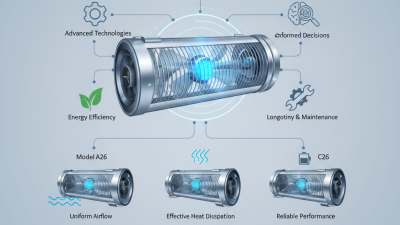
A Cross Flow Fan moves air across a long, cylindrical impeller rather than pushing it straight from a compact hub. You may find this design in room air conditioners, electric heaters, air curtains, and other equipment that needs a broad, even stream. The fan’s slim shape can fit behind a narrow grille. That detail matters in a wall-mounted unit or a dashboard vent.
Inside, curved blades rotate around the cylinder’s axis. Air enters near one side, passes through the impeller, and crosses the blade rows again before leaving. A swirling region inside the wheel helps guide this unusual path. The result is a relatively wide discharge that can spread across a surface. It is not magic. Fan size, blade shape, speed, and the surrounding housing all affect airflow and noise.
This guide explains the main parts, the airflow path, and where cross-flow designs are useful. It also considers practical trade-offs, including cleaning access, pressure capability, and operating sound. Performance varies by model and installation, so a fan’s appearance alone cannot tell you how well it will work. A dusty grille can change the experience. Small details count. Understanding the mechanism helps readers compare designs more carefully, though real-world testing remains important.
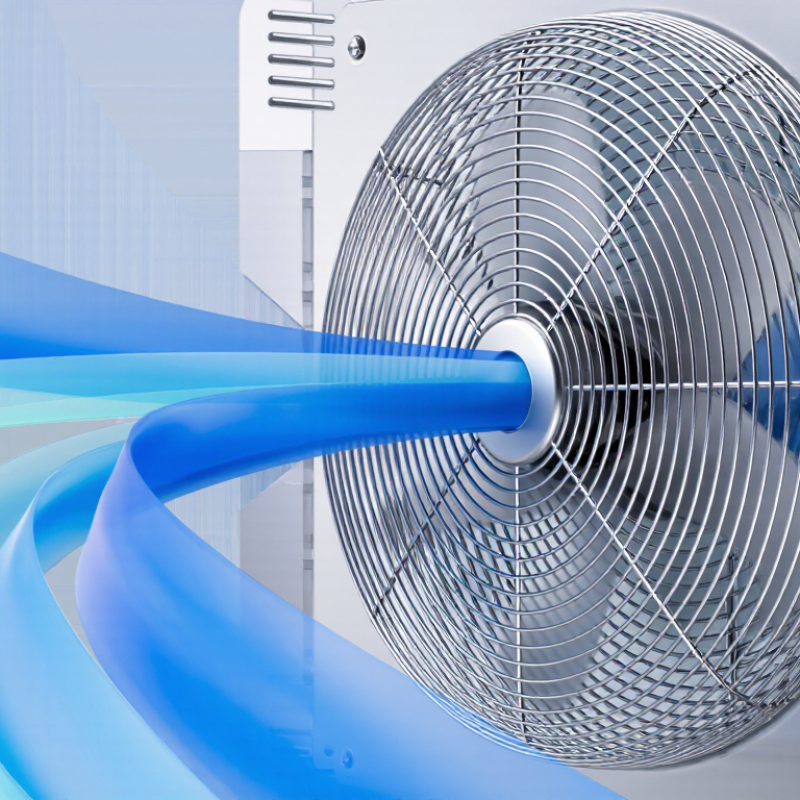
A cross-flow fan is a centrifugal-style fan that moves air across the length of a cylindrical rotor. Unlike a typical axial fan, which pushes air mainly along its shaft, it draws air in through one side and sends it out through a long, narrow outlet. The airflow passes through the rotor, crosses its interior, and leaves from the opposite side. This creates a broad, even stream that can cover much of a room or equipment opening.
The basic structure includes a long impeller, a close-fitting housing, and a motor that turns the impeller. Many designs also use a curved stabilizer near the rotor. It helps guide airflow and maintain the internal vortex that supports steady output. Look at the fan’s open ends: the rotor’s length often explains why the air spreads across a wide area. The blades are small and closely spaced. Dust can collect there. In practice, the housing gap and stabilizer position matter as much as rotor speed, though those details are easy to overlook. Small alignment differences may affect noise and airflow, so inspection should follow the equipment maker’s service guidance.
A cross-flow fan uses a long, cylindrical impeller to move air across its width. The impeller contains many narrow, curved blades fixed between end plates. As it rotates, air enters near one side, passes through the blade openings, and crosses the impeller’s interior before leaving through the outlet. A rotating vortex inside the wheel helps guide this sideways flow. The vortex is useful, but its position can shift if the housing is poorly matched to the impeller.
The housing surrounds the wheel and forms the inlet and discharge passages. Near the outlet, a shaped wall or cutoff separates incoming and outgoing air, helping maintain the internal vortex and direct airflow. Small changes in this clearance can affect noise and performance. The shaft supports the impeller, while bearings keep its rotation steady; the motor supplies the turning force. End plates help hold the blade assembly together and limit unwanted air leakage at the sides. In practice, dust buildup or a slightly bent blade can disturb the airflow. That detail matters. A fan may still run, yet deliver less air than expected. It is worth checking clearances and supports, though measurements can be fiddly.
A cross flow fan draws air into the side of a long, cylindrical rotor. Its curved blades catch the incoming air and guide it across the rotor’s width. Unlike a typical axial fan, which moves air along its shaft, this design sends air across the fan. The result is a broad, fairly even stream that can cover a long outlet.
Inside the rotor, airflow follows a less obvious path. Air enters through the blades, passes through the rotor’s central region, and leaves through another section of the blade circle. A circulating vortex forms inside, helping direct the flow toward the outlet. It is not a perfect, uniform whirl; blade shape, rotor speed, and nearby surfaces can change how stable it is. Small details matter.
You can picture the effect by holding a hand near a vent: the airflow feels like a flat sheet rather than a concentrated jet. This makes cross flow fans useful where air needs to spread across a wider opening, such as in some compact cooling or ventilation systems. Their performance still depends on the installation. A blocked inlet or tight outlet can reduce airflow and increase noise. I would not judge a fan by its shape alone; measuring airflow in the actual setup gives a more dependable answer.
A cross-flow fan moves air across a long, cylindrical impeller rather than straight through its center. Its curved blades draw air into the rotor, carry it around an internal vortex, and discharge it across the outlet. The result is a broad, flat stream of air. Useful for long openings. Not magic.
Airflow depends on rotor speed, blade geometry, and the shape of the housing. A nearby grille, filter, or tight bend adds resistance, shifting the fan’s operating point and reducing delivered flow.
The ASHRAE Handbook—HVAC Systems and Equipment explains how fan performance curves relate airflow to pressure and power. AMCA Publication 210-16 provides standardized laboratory methods for measuring fan airflow, pressure, and power.
Those measurements matter: free-air flow alone can overstate what a fan delivers once installed.
Control usually comes from changing motor speed or adjusting a damper. Speed control can regulate the air stream without forcing the fan against a restrictive opening. Yet the setting still needs testing in the actual enclosure.
A paper design may miss leakage, uneven outlet flow, or a noisy grille. Small details count. A handheld anemometer can reveal uneven velocities across the outlet, though one reading is not a full performance test.
A cross flow fan moves air across its long cylindrical rotor. Curved blades draw air inward, guide it through the rotor, and discharge it in a broad, even stream. Unlike an axial fan, it spreads airflow across the rotor’s length. This makes it useful where space is shallow but consistent air coverage matters.
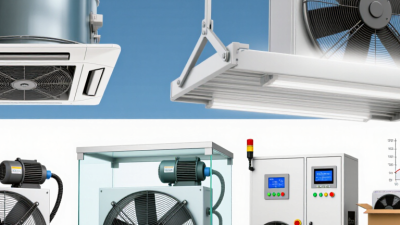
Common applications include air curtains, heating units, ventilation panels, electronic equipment, and indoor cooling systems. Designers choose these fans for their compact shape and relatively quiet operation. However, performance depends heavily on housing geometry, blade angle, rotor diameter, and motor speed. A poorly matched outlet can create turbulence, vibration, or uneven cooling. It may look efficient on paper, yet perform poorly after installation. Air filters also increase resistance over time, so real operating conditions deserve attention.
Measure airflow at the outlet, not only the motor rating. Keep the intake clear of dust and sharp bends. Check noise at the user’s actual distance. Leave enough service space for cleaning. A small adjustment can matter. Designers should also test several speeds, because the quietest setting may not provide adequate cooling. Sealing every gap is not always ideal; some systems need controlled relief to prevent pressure buildup.