Leave Your Message
Choosing reliable China Top Cross Flow Fan Manufacturers and Suppliers requires more than comparing catalog prices. A Cross Flow Fan must deliver stable airflow through a narrow, elongated outlet. Its performance depends on impeller geometry, motor quality, housing design, noise control, and testing discipline. These details become visible in real equipment: a clean air curtain, even heat distribution, and fewer vibration marks around the mounting frame.
Bruno Eck, a respected fan-engineering author, wrote, “The design of a fan must begin with the required air performance.” This principle remains practical for buyers evaluating Chinese suppliers. Experienced manufacturers should provide airflow curves, static-pressure data, efficiency figures, noise readings, motor specifications, and sample-testing records. They should also explain how each model performs at different speeds, temperatures, and installation angles. A polished website is not enough.
Look for evidence.
Factory experience matters, but it can be difficult to verify. Ask about impeller balancing, bearing selection, insulation classes, endurance testing, and quality-control checkpoints. Request photographs or videos from production and testing areas. Certifications can support trust, though they do not replace technical communication or independent inspection. Some suppliers promise impressive airflow while overlooking sound pressure or energy consumption. That weakness deserves attention.
This guide examines leading China Top Cross Flow Fan Manufacturers and Suppliers through practical selection criteria. It considers customization, production capacity, export experience, after-sales support, and application knowledge. The ranking may not be perfect. Supplier data changes, and published claims require careful confirmation. Still, a disciplined comparison can help HVAC, appliance, electronics, and industrial-equipment buyers choose a safer and more suitable partner.
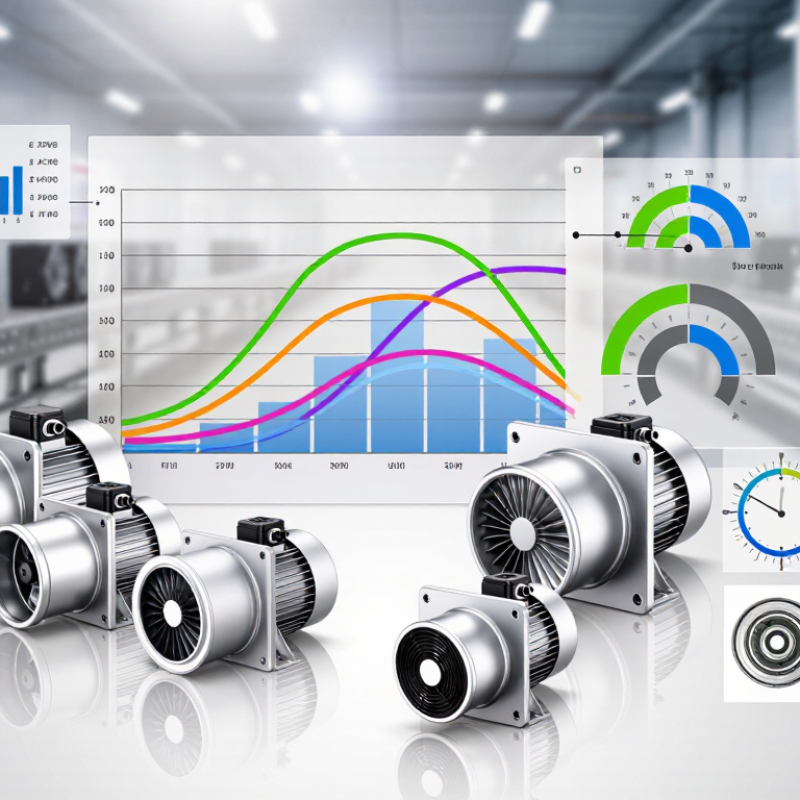
A cross-flow fan, also called a tangential fan, moves air across the full length of its cylindrical impeller. Unlike an axial fan, it does not push air straight through its center. Air enters near the impeller edge, passes through the rotating blades, forms a controlled vortex, and exits through the outlet. The casing guides this airflow into a wide, even stream. This design suits air curtains, indoor units, display equipment, and compact cooling systems.
Its performance depends on blade shape, impeller diameter, motor speed, and casing clearance. A narrow gap can improve pressure, but it may also increase noise. Engineers normally verify airflow, static pressure, sound level, and efficiency under AMCA 210 or ISO 5801 testing methods. The International Energy Agency’s Energy Efficiency 2023 report states that buildings consume about 30% of global final energy. Small fan improvements therefore matter when equipment runs continuously. A practical supplier should provide test curves, operating limits, vibration data, and motor efficiency figures.
In China’s manufacturing market, many suppliers can produce customized lengths and outlet shapes. However, catalog airflow is not enough. Real performance may change after filters, heat exchangers, or tight grilles are installed. I have seen selection errors caused by testing fans without the final enclosure. That shortcut seems harmless, but it can distort pressure and noise results. A better evaluation uses the complete assembly, measured at the intended duty point. Cost still matters, though reliability usually matters more.
| Data Dimension | General Technical Information | Importance When Selecting a Supplier |
|---|---|---|
| Fan Type | A cross-flow fan, also called a tangential fan, is a centrifugal-style fan that produces airflow across the length of a cylindrical rotor. | Confirm that the supplier has experience with tangential airflow applications rather than only axial-fan products. |
| Airflow Direction | Air enters near one side of the rotor and is discharged through the opposite side, with the main air movement perpendicular to the rotor axis. | The outlet direction and discharge width should match the equipment’s internal air channel and installation space. |
| Rotor Construction | The rotor normally contains many forward-curved blades arranged around a cylindrical drum. Blade geometry affects airflow, pressure, noise, and efficiency. | Request rotor diameter, rotor length, blade material, balancing method, and dimensional drawings before approval. |
| Working Principle | The rotating blades accelerate air and create a vortex inside the rotor. A housing and inlet/outlet geometry guide the air into a relatively wide, uniform discharge stream. | A supplier should provide airflow curves and explain how the housing design controls recirculation and pressure loss. |
| Airflow Distribution | Cross-flow fans are suitable for producing a long, broad air curtain or an even airflow over the width of a unit. | Check airflow uniformity across the complete outlet length, especially for heating, cooling, and air-curtain equipment. |
| Pressure Capability | These fans are generally used for low-to-moderate pressure applications. Actual performance depends on rotor geometry, speed, housing design, and system resistance. | Select a supplier that can provide a tested performance curve at the required airflow and static pressure operating point. |
| Typical Motor Options | Common options include shaded-pole motors, permanent-split-capacitor motors, brushless DC motors, and electronically commutated motors. | Compare voltage, frequency, input power, speed control, starting method, insulation class, and expected operating life. |
| Speed Control | Depending on the motor design, speed may be controlled through voltage regulation, capacitor selection, pulse-width modulation, or an electronic control signal. | Confirm compatibility with the customer’s controller and verify motor temperature at minimum and maximum operating speeds. |
| Noise and Vibration | Noise is influenced by blade shape, rotor balance, motor type, rotational speed, inlet turbulence, and mounting structure. | Ask for sound-pressure data, test conditions, balancing tolerances, and vibration measurements rather than relying only on nominal noise figures. |
| Common Applications | Typical uses include air curtains, room air conditioners, fan-coil units, display cases, air purifiers, heating equipment, ventilation units, and electronic cooling systems. | Application-specific testing is important because required airflow, pressure, temperature, humidity, and duty cycle vary significantly. |
| Space-Saving Design | The long, narrow form factor can provide a wide airflow outlet while fitting into relatively shallow equipment housings. | Provide the supplier with available length, diameter, outlet position, mounting points, and clearance limits. |
| Materials and Protection | Rotors and housings may be manufactured from engineered plastics, coated steel, aluminum, or other application-specific materials. | Evaluate temperature resistance, corrosion resistance, flame-retardant requirements, ingress protection, and material compliance. |
| Operating Environment | Performance can change with ambient temperature, air density, dust, moisture, altitude, and installation orientation. | The supplier should confirm allowable ambient temperature, humidity range, altitude correction, and environmental protection level. |
| Performance Documentation | Useful documents include dimensional drawings, airflow-pressure curves, electrical specifications, noise data, efficiency information, and installation instructions. | Complete documentation makes it easier to compare suppliers objectively and reduce design changes during production. |
| Quality Verification | Important checks include rotor balance, dimensional inspection, motor electrical testing, airflow testing, noise measurement, and endurance testing. | Request inspection records, sample-test procedures, traceability information, and corrective-action processes. |
| Customization Capability | Customization may include rotor length, diameter, blade profile, housing geometry, motor specification, mounting brackets, wiring, and connectors. | Before placing an order, confirm prototype support, tooling responsibility, minimum order quantity, lead time, and change-control procedures. |
| Key Selection Criteria | The main factors are required airflow, static pressure, available space, power supply, speed-control method, noise limit, operating environment, and service life. | Use the same technical checklist and test conditions for every potential supplier to create a fair comparison. |