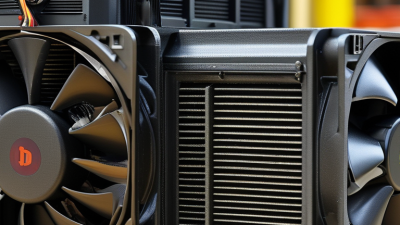
Choosing a reliable Dc Blower Fan supplier requires more than comparing prices or browsing product photographs. Engineers examine airflow, static pressure, noise, power consumption, operating temperature, and expected service life. A compact fan may look efficient on paper, yet perform poorly when filters become clogged or ventilation paths narrow.
Worldwide manufacturers serve different demands. Some specialize in electronics cooling, while others produce blowers for medical equipment, HVAC systems, appliances, and industrial control cabinets. Strong suppliers usually provide detailed curves, sample testing, traceable materials, and responsive technical support. Certifications matter, but they do not replace practical validation inside the finished product.
As ebm-papst ventilation specialist Klaus Geißdörfer has emphasized, “Energy efficiency begins with the right airflow design.” This principle remains useful when evaluating every Dc Blower Fan supplier. Buyers should compare measurable performance under realistic conditions, not only laboratory figures. Check connector options, impeller balance, bearing design, and production consistency. Ask how suppliers manage replacement parts and quality changes across international shipments.
No ranking is perfect. A manufacturer with excellent engineering may have slower delivery. Another may offer fast production but limited customization. That trade-off deserves attention. The following overview examines leading Dc Blower Fan manufacturers and suppliers worldwide through technical capability, product reliability, application experience, and customer support. It also considers details often missed during purchasing, such as acoustic behavior, thermal derating, and long-term availability. Small differences can become costly problems. Careful comparison is still the safest path.
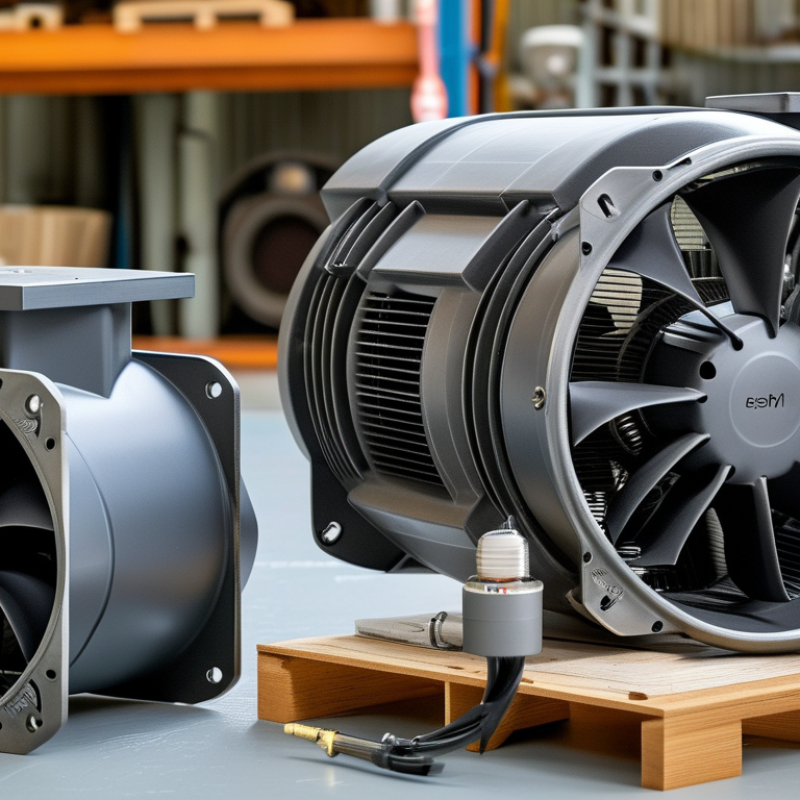
A DC blower fan combines a centrifugal impeller with a direct-current motor. Unlike an axial fan, it pushes air through a narrow outlet. This design creates stronger static pressure for compact equipment. Most modern units use brushless DC motors and electronic commutation. Speed can change through voltage control, PWM, or a digital signal. That flexibility supports quieter operation and lower energy use. Yet efficiency depends on the full system, not the motor alone.
Its main applications include laptops, servers, battery systems, medical devices, air purifiers, and vehicle climate modules. In data centers, airflow management is increasingly important. The International Energy Agency reported that data centers used about 460 TWh of electricity worldwide in 2022. Cooling demand forms a meaningful part of that load. A properly selected blower can improve heat removal in restricted spaces. However, a powerful fan may waste energy if the duct path creates excessive resistance. This is where product selection often becomes less exact than expected.
Tips: Check airflow and static pressure together. Review the fan curve, not only the rated air volume. Measure noise at the intended distance. Confirm the operating voltage and control method. Dust, heat, and vibration can shorten service life. A small error in outlet size may produce turbulence and disappointing performance. Testing the assembled device remains essential, even when laboratory specifications look convincing.
Top DC Blower Fan Manufacturers and Suppliers Worldwide
Key Factors for Evaluating Global DC Blower Fan Manufacturers
Evaluating global DC blower fan manufacturers requires more than comparing catalog prices. Performance data should match your operating conditions. Request airflow, static pressure, noise, current draw, and lifespan curves. Then test samples inside the intended equipment, not only on a laboratory bench. A fan that performs well at room temperature may struggle near a heat source.
Manufacturing expertise matters. Examine motor design, bearing quality, impeller balance, and speed control options. PWM control and tachometer feedback can improve system accuracy. Ask how suppliers manage tooling changes and component shortages. Reliable manufacturers provide traceable inspection records, electrical safety documents, and production samples. Certifications should fit the destination market and product application.
Supply capability also deserves close attention. Review minimum order quantities, lead times, warranty terms, packaging, and replacement support. A factory audit or live production review may reveal more than a polished brochure. Communication speed is useful, but technical clarity matters more. In practice, low pricing can hide tooling fees, unstable tolerances, or expensive shipping. That is easy to miss. Even experienced buyers can overvalue a successful sample. Long-term evaluation should include vibration testing, repeated start-stop cycles, and performance checks after dust exposure.
| Supplier Profile | Primary Supply Region | Typical Product Configuration | Common Rated Voltage | Typical Airflow Range | Typical Static Pressure | Motor and Bearing Options | Protection and Compliance Features | Customization Capability | Typical Production Lead Time | Best Evaluation Focus |
|---|---|---|---|---|---|---|---|---|---|---|
| Profile A | East Asia | Compact centrifugal blowers for electronics cooling and control cabinets | 12 VDC, 24 VDC | 15–180 m³/h | 40–280 Pa | Brushless DC motor; sleeve or dual-ball bearing | Reverse-polarity protection, locked-rotor protection, CE and RoHS documentation commonly available | High; speed signals, PWM control, connectors, impeller geometry and label design | 2–5 weeks for standard models; 6–10 weeks for customized designs | Verify acoustic test conditions, lifetime data and consistency between production batches |
| Profile B | Western Europe | High-reliability blowers for industrial automation, HVAC controls and instrumentation | 12 VDC, 24 VDC, 48 VDC | 30–420 m³/h | 100–650 Pa | Brushless EC motor; dual-ball bearing is widely specified for extended service | CE, UKCA, RoHS and REACH support; optional IP-rated housings and thermal protection | Medium to high; airflow curves, mounting interfaces and control firmware options | 4–8 weeks for standard products; 8–14 weeks for engineering changes | Compare measured efficiency, operating temperature range and service-life calculations |
| Profile C | North America | Blowers for telecom equipment, server cooling and power-conversion systems | 12 VDC, 24 VDC, 48 VDC | 50–600 m³/h | 150–900 Pa | Brushless DC motor; dual-ball bearing and electronically commutated options | UL-recognized component options, RoHS compliance and over-temperature protection | Medium; tachometer output, PWM control, alarms and custom mounting plates | 3–7 weeks for standard models; 8–12 weeks for custom assemblies | Request reliability projections, vibration limits, sound-power data and thermal derating curves |
| Profile D | Southeast Asia | Cost-optimized blowers for appliances, POS equipment and general-purpose ventilation | 5 VDC, 12 VDC, 24 VDC | 10–250 m³/h | 30–350 Pa | Brushless DC motor; sleeve bearing for economy models and ball bearing for longer duty cycles | RoHS and CE documentation commonly available; basic stall and surge protection | High for volume programs; housing colors, cable assemblies and packaging | 2–4 weeks for standard items; 5–9 weeks for customized volume orders | Assess incoming inspection controls, sample-to-mass-production consistency and warranty terms |
| Profile E | Japan and South Korea | Low-noise blowers for medical, laboratory and precision electronic equipment | 12 VDC, 24 VDC | 20–300 m³/h | 60–500 Pa | Brushless DC motor; precision-balanced impeller and dual-ball bearing | Low-electromagnetic-noise designs, RoHS support and optional medical-device documentation | Medium; acoustic optimization, airflow sensing and compact mounting solutions | 5–9 weeks for standard models; 10–16 weeks for customized development | Use the same test chamber and measurement method when comparing noise and vibration claims |
| Profile F | Central and Eastern Europe | Industrial blowers for machinery, energy equipment and harsh-duty enclosures | 24 VDC, 48 VDC | 40–500 m³/h | 120–800 Pa | Brushless DC motor; sealed ball bearing and reinforced impeller options | CE, RoHS and REACH support; optional IP54–IP68 system-level protection | Medium; reinforced housings, custom connectors and higher-temperature materials | 4–8 weeks for standard products; 8–15 weeks for custom configurations | Confirm corrosion resistance, ingress protection, shock testing and replacement-part availability |
| Profile G | India and South Asia | General industrial and commercial ventilation blowers with flexible volume production | 12 VDC, 24 VDC, 48 VDC | 25–350 m³/h | 70–550 Pa | Brushless DC motor; sleeve and ball-bearing configurations | RoHS and CE documentation may be available; thermal cutoff and surge protection options | High for cable assemblies, mounting brackets and packaging requirements | 3–6 weeks for standard models; 7–12 weeks for customized orders | Evaluate process certification, export packaging, component traceability and after-sales response |
| Profile H | Global Contract Manufacturing Supply Chain | OEM and ODM blower assemblies for multi-region equipment programs | 5 VDC, 12 VDC, 24 VDC, 48 VDC | 10–700 m³/h | 30–1,000 Pa | Brushless DC motor; bearing selection based on duty cycle, noise target and operating temperature | Compliance package is project-dependent; may include CE, RoHS, REACH, UL and EMC test reports | Very high; complete mechanical, electrical, firmware and packaging customization | 6–12 weeks for development; 8–18 weeks for production ramp-up | Prioritize engineering resources, tooling ownership, change-control procedures and supply continuity |
Top DC Blower Fan Manufacturers and Suppliers Worldwide
Leading worldwide suppliers serve different equipment needs through specialized DC blower fan designs. Some focus on compact blowers for medical devices, control panels, and portable instruments. Others produce high-pressure models for servers, battery systems, and industrial automation. Their product ranges may include sleeve-bearing, ball-bearing, and long-life electronically commutated motors. Experienced suppliers usually provide airflow curves, static-pressure data, noise ratings, and operating-temperature limits. These documents help engineers match a fan to real installation conditions, not just catalog measurements.
Regional expertise also matters. Suppliers in Asia often support high-volume production and custom tooling. European suppliers may emphasize energy efficiency, traceability, and detailed testing. North American distributors often provide faster sampling and technical support for replacement projects. However, no supplier is perfect. A promising sample can still perform differently after installation. Reliable sourcing requires verification through vibration checks, thermal testing, and endurance trials. Ask about incoming inspection, failure analysis, and production consistency. Clear answers reveal more than attractive specifications.
Tips: Request three samples from the same batch. Compare airflow, noise, current draw, and connector quality. Confirm dimensions before approval. Keep written test conditions. Small mounting changes can reduce airflow noticeably. Recheck performance after dust exposure, because clean laboratory results may not represent field use.
Bearing selection affects service life and noise. Sleeve bearings may suit light-duty devices, but ball bearings often tolerate higher temperatures and continuous operation.
Airflow curves deserve close attention. A fan delivering 80 CFM in free air may perform poorly behind a restrictive filter.
During equipment testing, I compare pressure, current draw, vibration, and sound at the actual operating point. Datasheets help, but field measurements sometimes reveal uncomfortable gaps.
Tips: Check the pressure curve, not only maximum airflow. Confirm PWM logic and tachometer compatibility before ordering. Ask for thermal derating data and endurance-test conditions. A metal housing may improve durability, yet it can transmit vibration without proper isolation. No design is universally best. Even experienced engineers can overlook inlet turbulence, cable orientation, or mounting stiffness. Small installation details often change the final result.
Selecting a global DC blower supplier starts with airflow evidence, not a polished catalogue. Define airflow, static pressure, voltage, noise, and duty cycle first. A blower rated at 100 cubic metres per hour may fail when filters add resistance. Request performance curves at your real operating voltage.
The IEA’s Energy Efficiency 2024 report places global efficiency investment above 600 billion dollars in 2024. This reinforces the value of efficient motor and control design. Ask suppliers for efficiency data, thermal limits, bearing life, and test conditions. The EU Ecodesign framework also evaluates fan efficiency, so compliance documents matter. ASHRAE guidance commonly places data-centre inlet temperatures near 18–27°C, making stable airflow and sensor control important. I have seen low-cost samples pass a bench test, then struggle inside a dusty enclosure. That weakness is easy to miss.
Tips: Compare three suppliers using one identical specification sheet. Request five samples, not one. Check acoustic readings in a semi-anechoic room, if possible. Confirm IP ratings, EMC results, production traceability, and replacement lead times. Use an independent laboratory for critical applications. Market reports can guide shortlisting, but they cannot replace verification. A supplier may publish impressive efficiency figures under ideal conditions. Your cabinet will not be ideal. Review warranty exclusions carefully, especially for dust, humidity, and continuous operation. A small pilot run can reveal vibration, connector, and firmware issues before volume purchasing.