What is a DC Brushless Cooling Fan and How Does it Work?
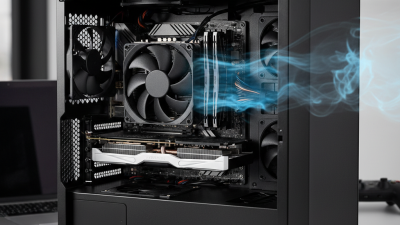
In today's technology-driven world, efficient cooling systems are essential. A DC Brushless Cooling Fan is a key component in various electronic devices. This type of fan operates without brushes, which means less friction and longer lifespan.
The design of a DC Brushless Cooling Fan allows it to run quietly. Its energy efficiency is another important aspect. These fans provide a reliable cooling solution for computers, servers, and HVAC systems. Users benefit from lower energy costs and extended equipment life.
Understanding how a DC Brushless Cooling Fan works can improve device performance. It uses electronic commutation instead of mechanical brushes. This innovation reduces wear and enhances reliability. However, not all applications may suit this technology. Some users might find conventional fans more accessible. Exploring this technology helps users make informed choices.
What is a DC Brushless Cooling Fan? An Overview of Its Design and Functionality
DC brushless cooling fans are unique devices designed for efficient heat dissipation. They utilize a brushless motor, eliminating the friction typically found in traditional fans. This design reduces wear and tear, resulting in a longer lifespan. According to industry reports, brushless fans can last up to 50,000 hours, compared to the 10,000-hour lifespan of brushed motors.
These fans operate through a precise electronic commutation system. This system manages the current flow, enabling the fan to maintain speed and torque. Unlike their brushed counterparts, DC brushless fans generate less noise and consume less energy. Data suggests they consistently offer a 30% energy efficiency increase over conventional fans. However, intricate design processes may lead to higher production costs, which can be a barrier for some manufacturers.
One challenge in the development of DC brushless fans is balancing efficiency and noise levels. While modern materials and technology assist in lowering noise, there is still room for improvements. Engineers focus on optimizing blade design and motor specifications to enhance airflow without sacrificing quiet operation. This ongoing need for refinement underscores the complexity of fan technology, as each choice impacts overall performance and usability.
Key Components of DC Brushless Cooling Fans and Their Roles
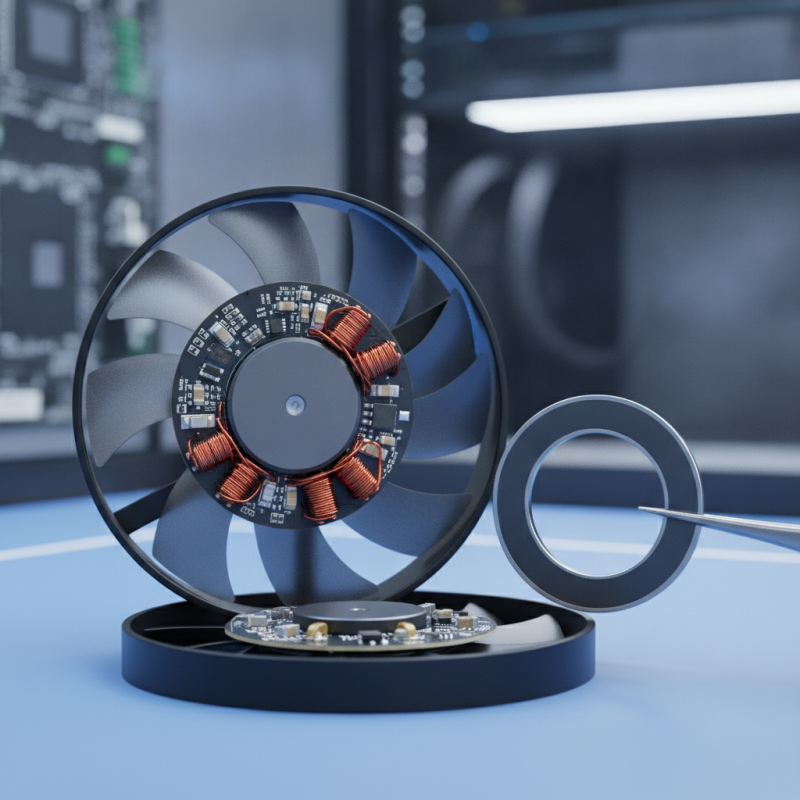
DC brushless cooling fans have become essential in various applications due to their efficient design and versatility. The key components of these fans include the rotor, stator, and electronic controller. Each part plays a critical role in the fan's operation. The rotor contains permanent magnets, allowing for efficient movement in the magnetic field generated by the stator. The stator features multiple coils, which work together to produce the magnetic field necessary for the rotor to spin.
The electronic controller is crucial as it regulates the fan speed and direction. By adjusting the power supply to the stator coils, the controller can ensure optimal performance while minimizing energy consumption. According to industry reports, DC brushless fans can achieve energy savings of up to 50% compared to traditional brushed fans.
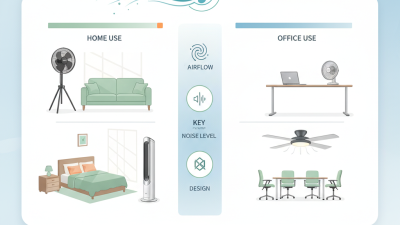
Tip: When selecting a DC brushless cooling fan, consider airflow and noise levels. Different applications may require specific airflow rates and acceptable noise thresholds. Understanding these parameters helps in making the right choice.
One challenge is the initial cost of DC brushless designs. Though they offer lower long-term costs due to energy efficiency and longevity, the upfront investment can be substantial. Users must weigh these factors and determine the best option for their needs.
Key Components of DC Brushless Cooling Fans
This chart illustrates the percentage contribution of various key components in DC Brushless Cooling Fans, highlighting their roles in functionality and efficiency.
How DC Brushless Motors Operate: Principles of Electromagnetic Induction
DC brushless motors operate based on the principles of electromagnetic induction. This technology allows for efficient motion without brushes. In a typical setup, the motor relies on a stator and rotor configuration. The stator contains coils energized by direct current, creating a magnetic field. This field interacts with the rotor, causing movement.
Understanding how these motors function requires some basic knowledge. When electricity flows through the coils, it generates a magnetic field. This process attracts and repels magnets on the rotor. The rotor spins as the magnetic fields change. An electronic controller manages this switching, ensuring smooth and precise operation.
While the design and function are impressive, challenges exist. Heat generation is a notable issue. If not managed properly, it can lead to motor failure. Additionally, the complexity of the control system can be a stumbling block for some applications. However, with proper engineering, these setbacks can often be mitigated, allowing the technology to shine.
Advantages of Using DC Brushless Cooling Fans in Modern Applications
DC brushless cooling fans are becoming essential in various modern applications. One of the main advantages of these fans is their energy efficiency. They consume less power than traditional fans. This characteristic is crucial in environments that demand 24/7 operation, such as data centers and industrial machinery, where energy savings can lead to significant cost reductions.
Another important benefit is their long lifespan. Without brushes to wear down, these fans have a slower degradation rate. This reliability reduces maintenance costs over time. However, it is important to note that while they may last longer, initial setup and integration can be more complex. Users must carefully consider compatibility with existing systems. This nuance can lead to unexpected challenges during installation.
Additionally, DC brushless fans operate quietly. This aspect is vital in settings like offices and hospitals, where noise can be disruptive. Yet, some users might overlook noise levels when selecting a fan, focusing solely on performance data. Balancing efficiency, lifespan, and noise is essential for optimal performance in any application. Proper assessments ensure the best choice is made for specific needs.
What is a DC Brushless Cooling Fan and How Does it Work?
| Specification |
Details |
| Type |
DC Brushless Fan |
| Power Supply |
12V to 48V DC |
| Motor Type |
Brushless DC Motor |
| Efficiency |
Up to 90% |
| Lifespan |
50,000 - 100,000 hours |
| Noise Level |
10 - 35 dBA |
| Control Type |
PWM (Pulse Width Modulation) |
| Applications |
Computers, automotive, HVAC, industrial equipment |
| Advantages |
Higher efficiency, longer lifespan, lower noise, lightweight |
Industry Trends: Performance Metrics and Efficiency Standards of Brushless Fans
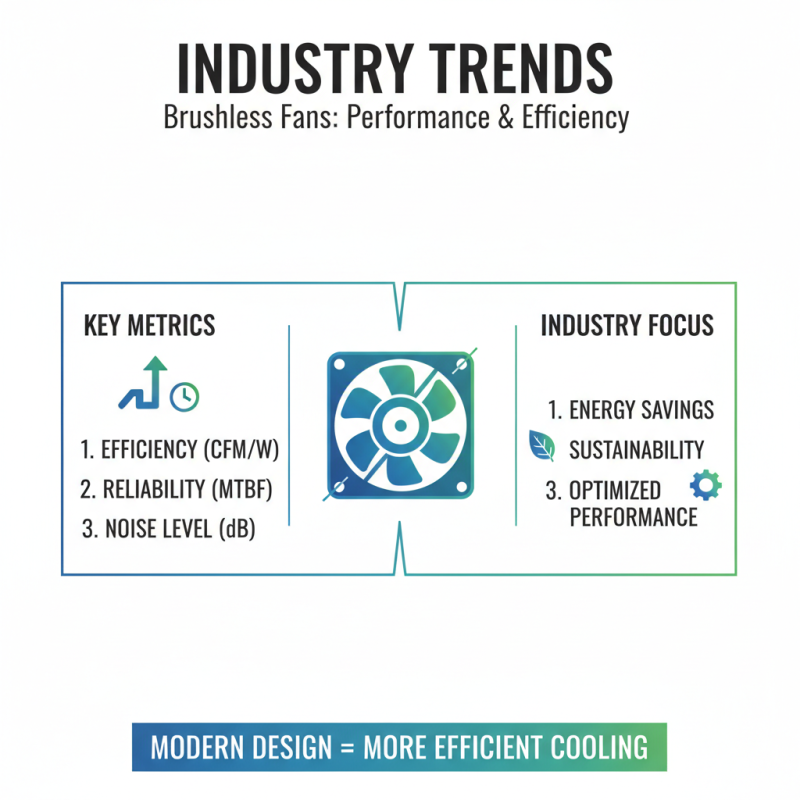
In recent years, brushless DC cooling fans have gained significant attention. Their efficiency metrics are crucial for various industries. Modern brushless fans are designed to optimize performance while reducing energy consumption. This trend reflects a growing emphasis on sustainability.
Efficiency standards are evolving rapidly. Many industries require fans that operate silently while maintaining effective airflow. This creates a challenge for manufacturers. They must balance noise levels with cooling capabilities. Metrics such as airflow, static pressure, and power consumption guide these developments.
The need for innovation is constant. Some fans offer advanced features, like speed control and smart technology integration. However, integrating these features can complicate design. Achieving a perfect balance is often a continuous process. As we explore future trends, the focus on performance and energy efficiency will remain vital. Each advancement brings new questions and potential areas for improvement.