How to Choose the Right DC Brushless Cooling Fan for Your Needs?
Choosing the right DC Brushless Cooling Fan can significantly impact your device's performance. These fans are renowned for their efficiency and longevity. However, navigating through various specifications can be overwhelming.
When selecting a DC Brushless Cooling Fan, consider your specific cooling needs. Factors such as size, airflow rate, and noise level are crucial. A fan too small may not provide adequate cooling, while a larger one could be unnecessarily loud. Each application has unique demands.
It's also important to reflect on the brand's reliability. Some manufacturers are well-regarded for their innovations, while others may lack the same reputation. Research customer reviews and expert opinions to identify trustworthy options. Embracing this thoughtful approach will lead to better choices, ultimately enhancing your cooling system's effectiveness.
Understanding the Basics of DC Brushless Cooling Fans
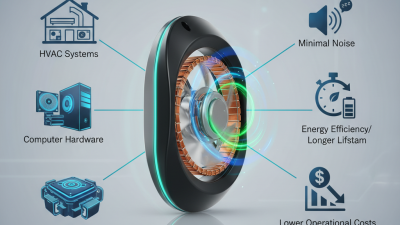
DC brushless cooling fans are essential components in various applications, from computers to HVAC systems. Understanding their fundamentals will help you make informed choices. These fans use a brushless motor, offering higher efficiency and longevity compared to traditional fan types. They also produce less noise, which is crucial for environments requiring minimal sound interference.
When selecting a fan, consider the size and airflow requirements. Choose a fan with the right dimensions to fit your space. The airflow, measured in cubic feet per minute (CFM), indicates how much air the fan can move. For hiccups during installation, make sure to check compatibility with your system.
It is helpful to look for specifications like voltage and current ratings. These define the fan's operational efficiency. Sizing and compatibility can lead to unexpected issues if overlooked. While finding the perfect fan may require some trial and error, researching and comparing options can ease the decision-making process. Always ensure the fan's specifications align with your cooling needs for optimal performance.
How to Choose the Right DC Brushless Cooling Fan for Your Needs?
| Parameter |
Description |
Typical Value |
| Voltage (V) |
Operating voltage of the fan |
12V |
| Airflow (CFM) |
Volume of air moved by the fan per minute |
50 - 150 CFM |
| Noise Level (dBA) |
Sound pressure level emitted by the fan |
20 - 40 dBA |
| Speed (RPM) |
Rotational speed of the fan |
800 - 3000 RPM |
| Size (mm) |
Diameter of the fan |
40, 80, 120 mm |
| Lifespan (hours) |
Average operational life of the fan |
30,000 - 100,000 hours |
| Bearing Type |
Mechanism of fan rotation |
Ball, Sleeve, or Fluid Dynamic |
Key Specifications to Consider When Selecting a Fan
Choosing the right DC brushless cooling fan involves understanding key specifications that influence performance. Noise levels are crucial, especially in sensitive environments. Data shows that fans with a sound rating below 30 dBA are more suitable for quiet operations. Meanwhile, airflow, measured in CFM (cubic feet per minute), directly affects cooling efficacy. Fans with higher CFM values efficiently dissipate heat, making them ideal for high-performance applications.
Another significant aspect is the fan's static pressure. This measurement indicates the fan's ability to push air through obstructions like filters. Research indicates that fans designed for high static pressure are essential in scenarios with restricted airflow. Moreover, the operating voltage and current rating are vital for compatibility with power sources. Many applications prefer 12V or 24V fans for optimal energy efficiency, which often correlates with lower operational costs over time.
While selecting a fan, it's essential to reflect on the balance between efficiency and performance. What works in one scenario may not suit another. For instance, a fan optimized for high CFM may generate more noise, which is undesirable in certain settings. Therefore, assessing the specific needs of your application is vital. Understanding these specifications leads to better decisions in selecting the right DC brushless cooling fan for your needs.
Cooling Fan Specifications Comparison
Assessing the Noise Levels and Efficiency of Cooling Fans
When choosing a DC brushless cooling fan, noise levels and efficiency are paramount. Noise is often an overlooked factor. A fan that operates too loudly can disrupt work environments or living spaces. Measure decibels carefully; a slight increase can make a big difference. Fans usually operate in ranges between 20 dB to 40 dB. Consider your specific needs.
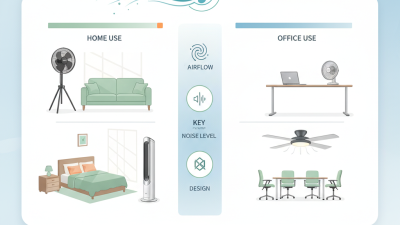
Efficiency impacts not only performance but also energy consumption. The efficiency of a fan is determined by its airflow (measured in CFM) relative to power usage (measured in watts). A fan with high airflow that uses more power isn’t always the best choice. For example, a fan with moderate airflow that runs quietly might be more suitable for home use.
Take time to compare specifications. Manufacturers often list noise levels and efficiency ratings on product data sheets. Understanding these factors enables you to make an informed decision. Reflect on your priorities. Sometimes, a quieter fan is worth sacrificing a bit of airflow. Balancing these elements is essential for optimal performance and comfort.
Evaluating the Size and Form Factor to Fit Your Application
Choosing the right size and form factor for a DC brushless cooling fan can significantly impact your application. Fans come in various dimensions. Common sizes include 40mm, 60mm, and 120mm, each suited for specific applications. For instance, a 120mm fan can move more air than a smaller 40mm unit. However, space constraints often dictate the fan size. According to a recent market analysis, approximately 30% of cooling failures in electronics occur due to improper fan sizing.
When evaluating form factor, consider the installation space. Thin-profile fans are essential for compact designs. These fans, often measuring less than 25mm in thickness, offer flexibility in various designs. The airflow and static pressure ratings also vary by size and form factor. Research indicates a direct correlation between fan size and airflow efficiency. For instance, larger fans usually operate at lower RPMs while maintaining adequate airflow, leading to quieter operation and longer lifespan. Still, fitting a larger fan in a tight space may require creative mounting solutions.
Reflecting on these factors can lead to better performance and efficiency. It's crucial to balance size, airflow, and acoustics. Under-sized fans may struggle, while oversized ones could create unnecessary noise and vibration. A thoughtful approach to fan selection can prevent such challenges, ultimately enhancing the overall reliability of your systems.
Identifying Your Cooling Requirements for Optimal Performance
Identifying your cooling requirements is crucial for selecting the right DC brushless cooling fan. Start by assessing the heat generated by your components. Research indicates that electronic devices, particularly CPUs, can produce temperatures exceeding 85°C under peak performance. Understanding this metric can guide you in selecting a fan that matches your cooling needs.
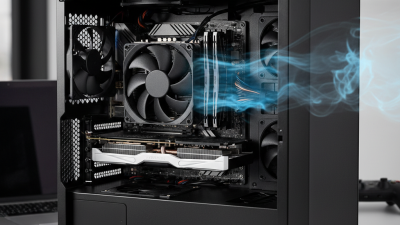
Next, consider the airflow requirements. Fans are rated in cubic feet per minute (CFM), which measures airflow. For instance, a high-performance graphics card might require a fan that can provide at least 50 CFM for effective cooling. Insufficient airflow might lead to thermal throttling, which could hamper performance. In critical applications, a fan's static pressure is also essential. Higher static pressure fans perform better in restrictive environments.
Finally, think about noise levels. While some fans can push significant CFM, they may produce excessive noise. Research shows that sound levels exceeding 30 decibels can disrupt work environments. Striking a balance between airflow and noise will enhance your overall performance and comfort. Awareness of these parameters can help you make informed decisions while optimizing your cooling solution.