How to Choose a Cooling Fan for Global Sourcing?
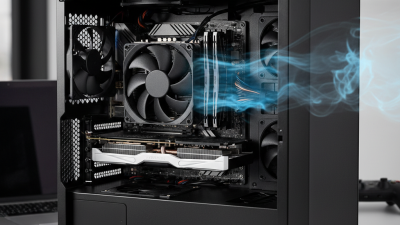
Choosing a Cooling Fan for global sourcing is not simply a matter of comparing prices. It requires practical engineering judgment, supplier verification, and careful testing. A fan that works well in a Shenzhen laboratory may fail in a dusty warehouse in Mexico. Voltage, frequency, airflow, static pressure, noise, bearing type, and operating temperature all influence the final result. So does the enclosure design.
Gerhard Sturm, co-founder of ebm-papst, has said, “The best energy is the energy that is not consumed.” This principle remains highly relevant when selecting a Cooling Fan. A high-efficiency EC motor may reduce electricity costs over years, even when its purchase price is higher. However, efficiency claims should not be accepted without test data, not even from an experienced supplier. Ask for performance curves, noise measurements, material specifications, and samples from the intended production line. Check whether the fan supports your destination market’s voltage and certification requirements. Confirm packaging strength, replacement-part availability, and realistic lead times.
There is no perfect choice.
Sometimes, buyers focus too heavily on unit cost and overlook installation labor or early failures. I have seen specifications look excellent on paper, yet the fan produced an irritating tonal noise after assembly. That possibility deserves attention. A reliable sourcing decision combines documented performance, supplier audits, prototype testing, and honest review of trade-offs. The right Cooling Fan should protect equipment, control operating costs, and remain dependable across different climates and supply conditions.
Define Cooling Needs: Airflow, Static Pressure, and Heat Load in CFM and Pa
Choosing a cooling fan starts with heat load, not fan size. I begin with the equipment’s total heat output in watts. Add processor heat, power losses, lighting, and nearby heat sources. Then set the maximum acceptable temperature rise. For a rough estimate, CFM ≈ 3.16 × watts ÷ temperature rise in °F. In metric terms, airflow is about 1.76 × watts ÷ temperature rise in °C. This estimate assumes normal air density and ignores several real-world losses.
Airflow ratings can look impressive. They may also be measured without resistance. Filters, grilles, ducts, and tight enclosures create static pressure, measured in pascals (Pa). A fan delivering 300 CFM at zero Pa may deliver far less inside a sealed cabinet. Plot the system resistance against the fan curve. Choose the operating point where airflow and pressure meet. I once selected a fan from its free-air rating and underestimated filter resistance. The cabinet stayed warm. That mistake was avoidable.
For global sourcing, request test data at the intended voltage, frequency, and operating temperature. Check CFM at a stated pressure, not only the maximum airflow. A practical reserve of 15–25% can help, but it should not replace testing. Higher pressure capability may increase noise and power use. Confirm performance at altitude when shipping equipment to elevated regions. Ask for sample measurements, thermal test conditions, and tolerance information. Supplier data is useful, but independent verification remains necessary.
How to Choose a Cooling Fan for Global Sourcing? - Define Cooling Needs: Airflow, Static Pressure, and Heat Load in CFM and Pa
| Typical Equipment or Application |
Estimated Heat Load |
Target Temperature Rise |
Calculated Airflow |
Recommended Design Airflow |
Expected Static Pressure |
Recommended Fan Type |
Selection Priority |
| Small network switch or router |
40–80 W |
10°C |
7.4–14.8 CFM |
10–20 CFM |
20–50 Pa |
Compact axial fan |
Balanced |
| Desktop computer enclosure |
150–300 W |
10°C |
27.8–55.6 CFM |
35–70 CFM |
40–100 Pa |
Medium-size axial fan |
High airflow |
| Industrial control cabinet |
300–600 W |
10°C |
55.6–111.1 CFM |
70–140 CFM |
100–250 Pa |
High-pressure axial fan or filtered fan unit |
High pressure |
| Telecommunications cabinet |
500–1,000 W |
10°C |
92.6–185.2 CFM |
120–230 CFM |
150–350 Pa |
High-pressure axial or centrifugal fan |
High airflow and pressure |
| LED lighting enclosure |
100–250 W |
15°C |
10.3–25.7 CFM |
15–35 CFM |
30–80 Pa |
Low-noise axial fan |
Low noise |
| Battery energy storage cabinet |
500–1,500 W |
8°C |
231.5–694.4 CFM |
280–850 CFM |
200–500 Pa |
Industrial centrifugal or high-pressure axial fan |
Safety critical |
| Outdoor electronic enclosure |
100–400 W |
10°C |
18.5–74.1 CFM |
25–95 CFM |
150–400 Pa |
Weather-resistant filtered fan system |
Environmental protection |
| Medical or laboratory instrument |
100–300 W |
8°C |
46.3–138.9 CFM |
60–170 CFM |
100–300 Pa |
Low-vibration centrifugal or axial fan |
Reliability |
| Small server or storage chassis |
250–600 W |
8°C |
115.7–277.8 CFM |
145–340 CFM |
250–600 Pa |
High-static-pressure axial or centrifugal fan |
High pressure |
| Solar inverter enclosure |
300–800 W |
12°C |
46.3–123.5 CFM |
60–150 CFM |
150–400 Pa |
Outdoor-rated axial fan with thermal control |
Thermal control |
Calculation and sourcing notes:
Airflow estimates use the sensible-heat relationship
CFM = Heat Load (W) ÷ [1.08 × Temperature Rise (°C)],
based on standard air near sea level. Recommended design airflow includes an allowance for filters, grilles, cable obstruction, aging, and installation variation. Static pressure values are practical preliminary design ranges; the final selection should be confirmed against the fan performance curve at the required operating point. For global sourcing, also verify voltage and frequency, connector type, IP protection, operating altitude, ambient temperature, noise level, bearing life, safety certifications, and regional compliance requirements.
Compare Fan Types by Efficiency, Noise, and Typical Lifespans Over 50,000 Hours
Choosing a cooling fan for global sourcing requires more than matching airflow numbers. Fan type affects efficiency, noise, maintenance, and service life. Axial fans move large air volumes efficiently through open pathways. They suit cabinets, heat exchangers, and compact electronic enclosures. Centrifugal fans create stronger pressure for filters and narrow ducts, but they often consume more power.
Bearing design strongly influences lifespan. Sleeve-bearing fans can be quiet and economical, but their service life may fall below 50,000 hours in hot environments. Ball-bearing fans commonly reach 50,000 to 70,000 hours and tolerate higher temperatures. They may produce slightly more mechanical noise. Fluid-bearing designs can exceed 50,000 hours while remaining quiet, although quality varies between suppliers. Listen closely.
Efficiency also depends on speed control. Electronically commutated fans usually deliver better energy performance than basic fixed-speed motors. A slower fan often reduces both noise and power consumption. However, an undersized fan may run continuously at maximum speed, creating more noise and shortening its useful life. Check airflow at the required system pressure, not only the free-air rating.
During supplier evaluation, request test data for temperature, humidity, dust, voltage, and operating hours. A 50,000-hour rating is not a promise under every condition. Mounting position, blocked vents, and bearing contamination can change the result. I would compare measured noise at one metre and inspect replacement availability. A spreadsheet helps, but real installation details still expose weak assumptions. That is where many sourcing decisions need rethinking.
Specify Size, Voltage, RPM, IP Rating, and Operating Temperatures for Global Use
How to Choose a Cooling Fan for Global Sourcing?
Choosing a cooling fan starts with the enclosure, not the catalog. Measure the available space, mounting holes, and airflow path. A 120 mm fan may fit physically but fail when a filter restricts air movement. Check airflow and static pressure together. RPM indicates speed, but it does not guarantee useful cooling. I once selected a high-RPM model that sounded impressive and performed poorly behind a dense grille.
Voltage must match the target equipment and local supply conditions. Confirm whether the fan uses DC or AC power. For AC models, check frequency compatibility with 50 Hz and 60 Hz systems. Request current consumption, connector details, rotation direction, and electrical tolerances. These small details can delay a shipment or create field failures.
Tips: Specify the IP rating based on real exposure, such as dust, splash, or outdoor moisture. IP54 may be unsuitable for heavy spray. Define operating and storage temperatures separately. Test the fan at the highest expected temperature, not only in a cool laboratory. Ask for samples, test reports, and production tolerances before placing a large order. Also consider noise, bearing life, vibration, and replacement availability. My specifications have improved through mistakes; temperature rise and blocked airflow are easy to underestimate. Keep the requirements measurable.
Evaluate Suppliers Through Certifications, MOQ, Lead Times, and Quality Data
How to Choose a Cooling Fan for Global Sourcing?
Demand for thermal management is rising. The IEA’s Electricity 2024 report estimates that data centers used about 460 TWh globally in 2022. It expects consumption to exceed 1,000 TWh by 2026. This makes supplier verification more important than a low unit price.
Ask suppliers for applicable certification documents, not just logo images. Check certificate numbers, test laboratories, product models, and expiry dates. CE is a declaration, not an independent safety certification. Depending on the application, review IEC, UL, RoHS, REACH, and ISO 9001 evidence. Confirm airflow and static-pressure results under recognized test methods, such as ISO 5801. A fan rated at 120 CFM may deliver much less inside a restrictive enclosure. That detail is often missed.
MOQ should match your forecast, cash flow, and failure-risk tolerance. A smaller pilot order can expose bearing noise, vibration, connector errors, and packaging damage. Lead times must include tooling, approval samples, production, inspection, and ocean or air transport. The 2023 World Bank Logistics Performance Index shows meaningful differences in customs and shipment reliability across markets. Use those differences in your schedule.
Request monthly quality data. Useful indicators include first-pass yield, return rate, noise deviation, and on-time delivery. Set acceptance limits in writing. A supplier may report excellent averages while hiding unstable batches. I have seen this happen. Do not rely on one sample. Recheck performance after storage, temperature cycling, and voltage variation. Some decisions still require judgment.
How to Choose a Cooling Fan for Global Sourcing?
Supplier screening based on certification coverage, minimum order quantity, lead time, on-time delivery, and quality performance. Lower MOQ, shorter lead time, and lower defect rates improve sourcing flexibility.
The weighted score combines certification coverage (20%), MOQ suitability (15%), lead-time efficiency (20%), on-time delivery (20%), and defect rate (25%). Quality data should be verified through inspection reports, corrective-action records, and recent production samples before approval.
Calculate Total Sourcing Cost Using Energy Use, Warranty, Logistics, and Duty Rates
Choosing a cooling fan for global sourcing starts with landed cost, not the invoice price. My first spreadsheet ranked the lowest unit quote first. It was wrong.
Use this formula: total cost = purchase price + logistics + duty + warranty reserve + lifetime energy.
The International Energy Agency’s The Future of Cooling reports that cooling electricity demand could more than triple by 2050, reaching about 6,200 TWh annually. Efficiency deserves attention. A 35-watt fan running 8,000 hours yearly costs about $39.20 at $0.14 per kWh. A 50-watt model costs $56. Over five years, the difference reaches $84 per unit. Small wattage gaps become expensive at scale.
Logistics and duty rates need separate checks. UNCTAD’s Review of Maritime Transport notes that shipping carries over 80% of global merchandise trade by volume, but freight prices can change sharply. Request quotes using the same Incoterm, carton size, and destination. Then verify the applicable tariff through the WTO World Tariff Profiles or the importing country’s customs authority. A 6% duty on a $28 customs value adds $1.68, though classification and origin rules may change the result. Add a warranty reserve based on pilot data, not hope. For example, a 2.5% reserve on a $40 landed unit equals $1. My calculation still excludes downtime, returns, and exchange-rate movement. That gap needs review.