2026 Best Cross Flow Fan Options for Efficient Air Circulation?
In the pursuit of efficient air circulation, the choice of a Cross Flow Fan is crucial. These fans provide a unique airflow pattern, ensuring optimal distribution across a space. According to a recent industry report by Research and Markets, the global market for ventilation fans is expected to grow by 4.5% annually through 2026. This growth highlights the increasing demand for effective air circulation solutions.
Cross Flow Fans are designed to operate quietly while delivering high airflow rates. They can significantly enhance the performance of HVAC systems. In commercial and industrial applications, these fans deliver equal air distribution and improved climate control. However, choosing the right fan can be challenging. There are various options with different specifications and features.
While many products promise efficiency, not all meet users' expectations. Consumers must research to find the best fit for their needs. Some fans may have limited durability or inadequate performance under certain conditions. This evolving market requires careful evaluation. Identifying reliable brands and understanding specific requirements are essential steps when selecting Cross Flow Fans.

Overview of Cross Flow Fans and Their Applications
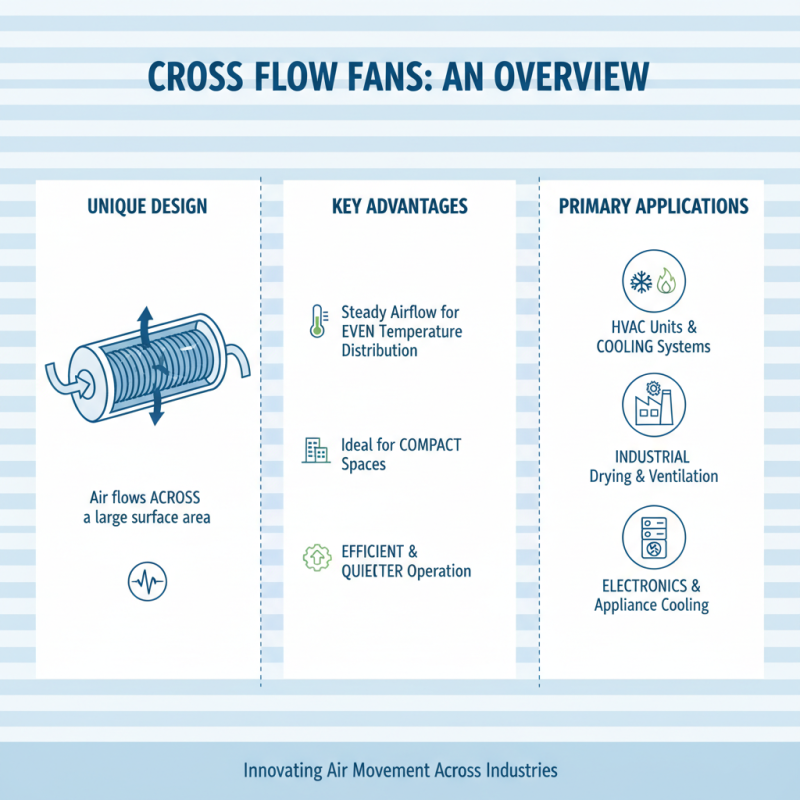
Cross flow fans are becoming popular for various applications. Their unique design allows air to flow across a large surface area. This feature makes them ideal for cooling systems, HVAC units, and even in industrial settings. They create a steady airflow, which can effectively distribute temperature. In compact spaces, cross flow fans excel where traditional fans may struggle.
These fans are often used in appliances like heaters and air conditioning units. They are also useful in electronic devices needing constant cooling. However, their efficiency can vary based on design and usage. Some models may produce more noise than others. Ensuring the right balance between airflow and noise is essential. Users should investigate specifications and choose wisely.
Installation and placement play critical roles in performance. A poorly positioned fan may lead to inadequate airflow, causing inefficient cooling. It’s important to consider how the fan fits into the overall airflow dynamic of the space. Regular maintenance can also impact performance. Dust buildup can hinder efficiency. Keeping the fan clean will ensure optimal operation.
Key Features to Consider When Choosing Cross Flow Fans
When selecting a cross flow fan, it’s important to focus on key features. Airflow performance is crucial. Look for models that optimize air distribution. A higher airflow rate leads to better cooling and ventilation. This can make a noticeable difference in various settings.
Another aspect to consider is noise level. Silent operation is often desirable. Some fans can become quite loud, especially at higher speeds. Pay attention to user reviews about noise. Finding a balance between power and sound can be challenging but essential for comfort.
Energy efficiency is vital too. Fans that consume less power are eco-friendly. They can save on electricity bills in the long run. However, some fans may focus too much on speed over efficiency. Striking the right balance can be difficult. Investing time in research will pay off in the end.
2026 Best Cross Flow Fan Options for Efficient Air Circulation
This bar chart illustrates the ratings of various key features to consider when choosing cross flow fans. Ratings are based on a scale from 1 to 10, reflecting aspects like airflow efficiency, noise level, energy consumption, durability, and cost. Higher ratings indicate better performance and suitability.
Top 2026 Cross Flow Fan Models for Optimal Performance
When selecting the top cross flow fans for 2026, performance is key. Industry reports suggest that effective air circulation can reduce energy costs by up to 20%. These fans are designed to deliver consistent airflow, which is crucial for cooling and ventilation.
Many models excel in energy efficiency. Look for fans that operate quietly. Noise levels can affect comfort in living and working spaces. A fan with a low decibel rating is worth considering. Pay attention to the fan’s size. A well-sized fan improves air distribution and prevents hotspots.
Tip: Consider the fan's design. A sleek, unobtrusive design can blend seamlessly with your decor. This allows for both aesthetics and functionality. Don’t overlook installation requirements. Some models may need professional support for optimal performance.
In the quest for the best fans, be aware of their limitations. A cross flow fan may not be suitable for larger areas. Adequate airflow depends on proper positioning. Sometimes, adjusting the fan’s angle can significantly enhance its effectiveness. Evaluating the space and airflow needs is crucial. Balancing performance with environmental factors can be challenging, but it’s essential for achieving maximum efficiency.
Comparative Analysis of Energy Efficiency in Cross Flow Fans
Cross flow fans are known for their efficient airflow. They operate by pulling air in through the side and pushing it out through the front. This design optimally circulates air in various environments. When evaluating their energy efficiency, it's important to consider different factors. These include size, motor efficiency, and airflow patterns.
Many users find that not all cross flow fans perform as expected. Some models may consume more energy than advertised. A deeper analysis reveals that the blade design plays a crucial role. Fans with curved blades often move more air while using less power. This maximizes efficiency.
However, energy efficiency should not be the only consideration. Noise levels can vary greatly among models. Some fans produce unpleasant sounds that disrupt environments. Finding a fan that balances both energy savings and quiet operation is essential. Exploring these aspects can help users make informed decisions about their airflow needs.
Maintenance Tips for Longevity and Efficiency of Cross Flow Fans
Cross flow fans are essential for maintaining effective air circulation. Regular maintenance is crucial for their longevity and efficiency. Checking for dust accumulation is vital. Clean the blades and housing at least once a month. Use a soft cloth to avoid damage. This simple action enhances airflow and keeps the fan running smoothly.
Lubricating the motor bearings can prevent overheating. A few drops of oil where needed make a big difference. Pay attention to strange noises. If you hear grinding or rattling, it might indicate a problem. Don’t ignore it; investigate promptly to avoid further issues. Inspecting electrical connections can also reveal potential issues. Loose wires can lead to malfunctions or even damage.
Finally, consider the environment. If the fan operates in a dusty or humid area, adjust your cleaning schedule. You may need to clean more frequently. Monitoring performance can help identify irregularities early. Remember, effective maintenance isn’t just about following steps; it's also about being aware of your fan's needs. Neglecting small signs can lead to bigger problems down the line.